
Category: Local SEO & Web Strategy
Tags: Shopify Store, South Florida eCommerce, Miami Business, Fort Lauderdale Business, Hollywood FL, Growth Strategies
If your Shopify store has that “stuck” feeling—traffic coming in, sales not scaling—this isn’t a motivation problem. It’s a front-end magic problem.
Not the fake kind. The real kind: the kind your customer feels in 5 seconds when they land on your site and think, “This is elite. I trust this.”
This is where Queen Codes With Sara Starseed meets Architectural Authority: the Executive Ethereal movement—elevated, calm, high-status—grounded in real systems. The AI architecture is the engine. But the vision and the result are the stars.
Because here’s the truth for South Florida scale-ups (Miami, Fort Lauderdale, Hollywood FL): when you build a high-authority foundation, everything becomes lighter:
- Shopify revenue stops depending on constant ad spend “hope”
- content starts compounding like an asset
- and your next-level offers finally have a place to land
This is the recovery arc:
stalling store → engineered authority → front-end magic → Rich Hippie lifestyle.
And yes, we track results. Soulpreneur Alchemy clients average 1,588% traffic increase and 5:1 marketing ROI when the foundation is built correctly (strategy + execution, not endless meetings).
Below are 5 growth strategies designed to create the kind of authority that allows Elite Courses, Content Vaults, and $10k offers to thrive—without your brand feeling “salesy,” messy, or stitched together.
1. Checkout Architecture (Reduce Drop-Off, Increase Revenue per Session)
Checkout isn’t a “page.” It’s a revenue gate.
If you’re stuck at ~$10k/month, you don’t need 20 new tactics. You need to remove the choke points where intent dies. And checkout is usually #1.
Benchmark reality: cart abandonment averages around ~70%. Source: Baymard Institute (Cart Abandonment Rate Statistics).
Execution infrastructure (what to build):
- Friction audit: map Cart → Checkout → Purchase and quantify loss at each step (not opinions—numbers).
- Momentum design: keep shoppers in-flow (cart drawer vs. dead-end pages where momentum collapses).
- Decision reduction: remove “second-guess” elements (excess fields, noisy upsells, coupon-box regret).
- Trust load-bearing elements: visible payment methods, clear shipping/returns, and clean security cues.
Case example: a Hollywood FL supplement brand was driving ~5,000 visitors/month. We rebuilt the checkout flow and reduced friction. Result: conversion rate moved from 2.1% to 3.8% in 30 days—same traffic, same products, higher yield.
If you want the prioritized punch list (what to fix first for ROI), start with our Quick Wins audit. We’ll find the leaks, rank them by revenue impact, and give you an execution roadmap you can actually build from.

2. Offer Ecosystem (So $10k Offers, Elite Courses, and Vaults Actually Convert)
This is the part most Shopify founders miss: your store can be profitable and still not be positioned for authority.
If you want Elite Courses, Content Vaults, and $10k offers to thrive, the store can’t feel like a transactional checkout machine. It has to feel like a brand house—with a clear ascension path.
Think in layers (Architectural Authority, but make it front-end magic):
- Entry layer: irresistible, easy “yes” product(s) that earn trust fast
- Core layer: your hero product line with clear differentiation + margin integrity
- Expansion layer: bundles/subscriptions/replenishment that stabilize cashflow
- Authority layer: your premium experiences (courses, vaults, masterminds, $10k offers)
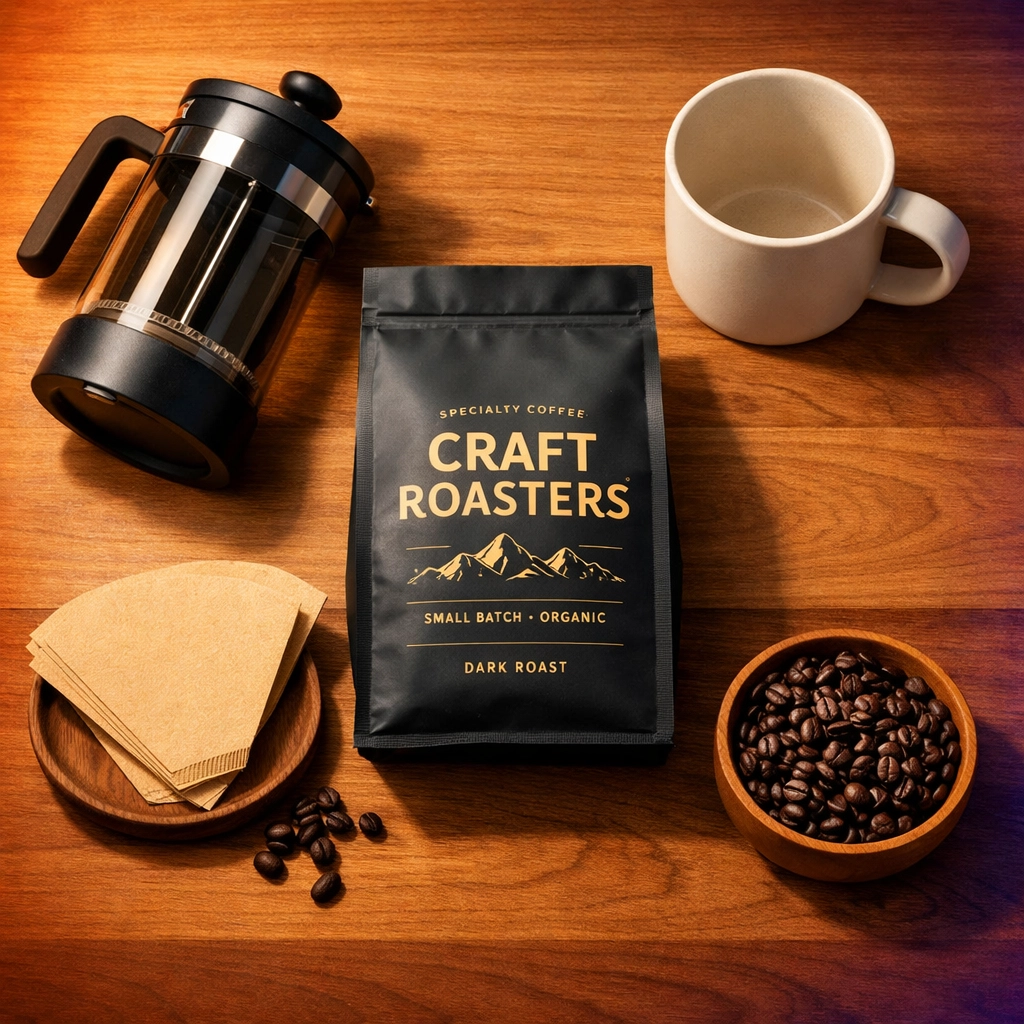
A Fort Lauderdale coffee roaster added brewing equipment and lifted average order value by 40% in six months—same audience, better structure.
Execution infrastructure (what to build):
- Ascension map: define what a customer buys 1st, 2nd, 3rd (and what content guides each step)
- Bundle logic: bundles that complete the “ritual” (not random discounts)
- Subscription where it’s natural: replenishment offers that increase LTV without extra ad spend
- Authority bridge: a clean pathway from product buyers → “vault/course” buyers → premium offer clients
This is the difference between “a store that sells” and “a brand that leads.”
3. Measurement Architecture (Stop Guessing, Start Governing the Numbers)
“Visionary” doesn’t mean vague. It means you see the system.
At ~$10k/month, the biggest hidden tax is decision-making without instrumentation. You can’t scale what you can’t measure—and you can’t claim authority if you can’t explain your numbers.
Benchmark: average Shopify conversion rate is often cited around ~1.4%, while top stores reach 3%+. Source: Thunderbit (Shopify Conversion Rate Statistics & Trends for 2026).
AI is useful here—not as a content shortcut, but as a pattern engine across your data.
Execution infrastructure (what to build):
- Single source of truth dashboard: sessions, conversion rate, AOV, CAC, MER, returning customer rate.
- Attribution sanity: align Shopify + ad platforms + analytics so you’re not optimizing off conflicting numbers.
- Cohort analysis: know what happens after purchase #1 (do they return in 30/60/90 days?).
- Forecasting: inventory + demand planning so stockouts don’t cap revenue.
Example: a Miami fashion brand used predictive analysis to plan for Art Basel season—stocked early, launched targeted campaigns, and sold out in 10 days. Competitors guessed. They ate overstock.
This is Architectural Authority: you don’t “hope” marketing works. You govern it.
4. Local Authority Architecture (Own South Florida Like a Category Leader)
Local isn’t just “mentions of Miami.” It’s proof. Presence. Precision.
After the December 2025 Google changes, generic content and thin authority signals became a liability. You need a local authority build that looks like a real brand with real-world relevance. Source: Amsive (December 2025 Core Update: Winners, Losers & Analysis).
Execution infrastructure (what to build):
- Location-aware pages: shipping/pickup details, local proof points, and service guarantees written for South Florida buyers.
- Neighborhood content clusters: Wynwood, Brickell, Las Olas, Downtown Hollywood, Design District—answer the actual buying questions tied to those places.
- Local link + collaboration strategy: partnerships, features, creator collabs, event tie-ins (Art Basel, fitness/wellness events, hospitality partnerships).
- Trust assets: reviews, UGC, press mentions, and clear policies that reduce purchase risk.
Example: a Hollywood FL home décor store built content around “Coastal Florida interior design trends” and partnered with local interior designers for Instagram takeovers. Within four months: page-one visibility for “home décor South Florida” and a 60% organic traffic lift.
Architectural Authority means your brand doesn’t just sell here. It belongs here.
5. Scale Architecture (Add Capacity Before You Add Complexity)
Most stores “stall” because they try to scale on a fragile operational base—then the first spike breaks fulfillment, customer support, margins, or retention.
Expansion (new regions, new channels, wholesale, international) is a capacity move. Treat it like one.
Execution infrastructure (what to build):
- Capacity plan: fulfillment SLAs, inventory buffers, support workflows, returns/refunds system.
- Margin model: contribution margin by SKU + channel, so growth doesn’t secretly reduce profit.
- Retention engine: email/SMS lifecycle flows + post-purchase experience (this is where LTV gets built).
- Test framework: small, controlled experiments with a clear pass/fail KPI before scaling spend.
We helped a Brickell-based supplement company test the Carolinas with a $2,000 campaign (Charlotte + Raleigh). Response was strong, we scaled, and within six months that region became 20% of revenue.
Architectural Authority is scaling in a way that your brand can hold—without chaos.

The Bottom Line: The Engine Is AI Architecture—The Prize Is the Lifestyle
Architectural Authority is what makes the front-end magic real.
When your foundation is built, your brand stops feeling like “another Shopify store” and starts moving like a market leader:
- cleaner conversions
- stronger trust
- content that compounds
- and premium offers that sell because the authority is already established
That’s the recovery: not hustle. Infrastructure. Execution. Authority.
And the result is the Rich Hippie outcome: freedom, space, and revenue that doesn’t require you to be glued to the dashboard all day.
At Soulpreneur Alchemy, we build these systems end-to-end—strategy through implementation—with a no-BS, done-for-you approach backed by 22+ years of experience. Want proof? Explore our case studies & portfolio.
High-Authority CTA (Do This Next)
If you’re at (or near) $10k/month and you’re ready to engineer your next level—courses, vaults, and $10k offers included—start with the audit that shows you exactly where the revenue is leaking and what to build next:
Run the Quick Wins Audit
Shopify performance + SEO + AI visibility + lead gen opportunities—prioritized by revenue impact.
Want us to implement everything with white-glove support (fractional CMO + PM + execution team)? Explore our packages.
Ready to activate front-end magic with architectural precision?
Let’s talk.
No responses yet